Building Webcrafts: The Engineering Behind AI-Native Web Development
A deep dive into how Webcrafts translates natural language into production-grade websites, the architecture, challenges, and lessons learned.
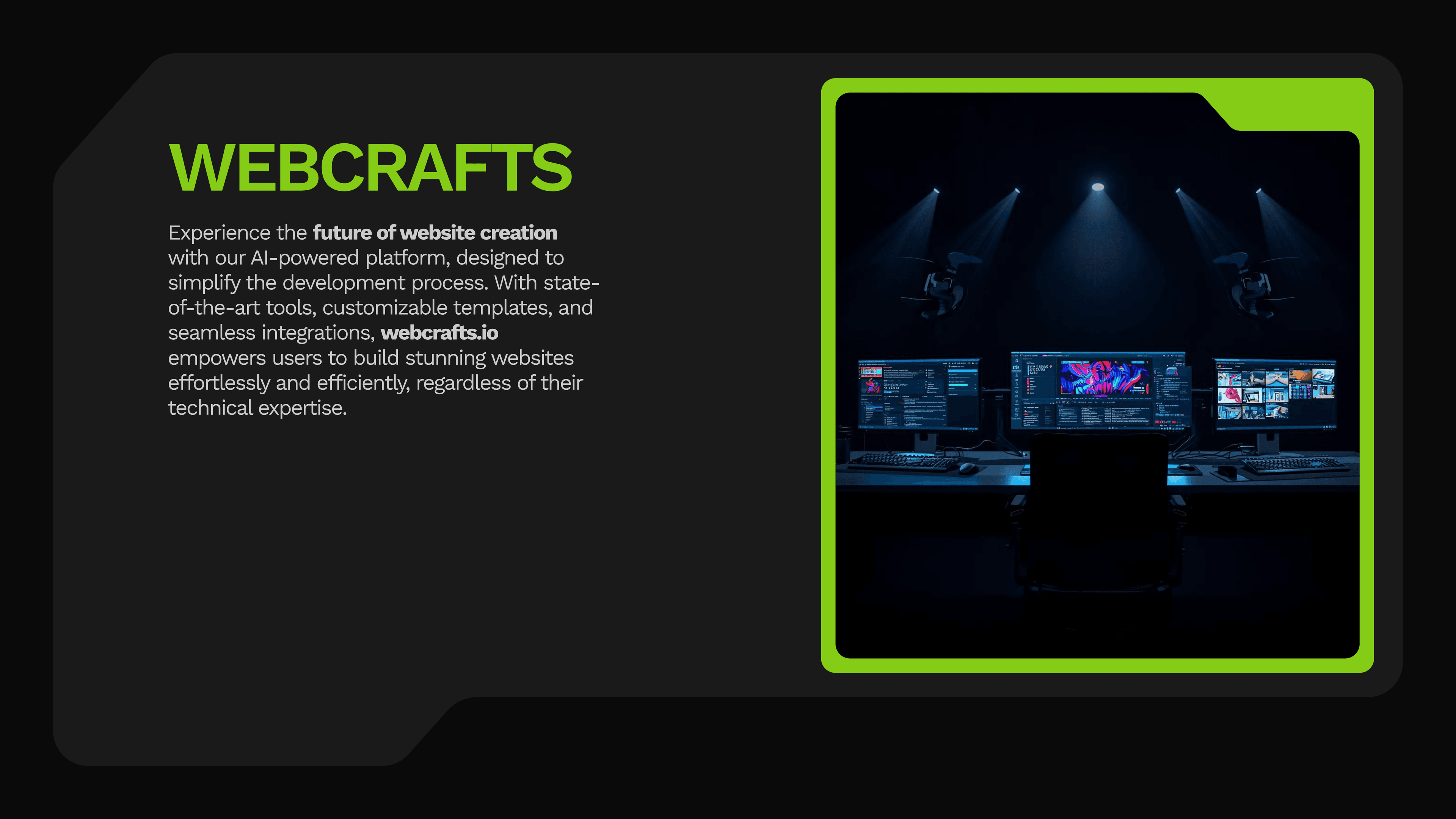
When we set out to build Webcrafts, we had a simple but ambitious goal: let anyone describe a website in plain English and get production-ready code in minutes. Here's how we made it work.
The Architecture
Webcrafts is built on a three-stage pipeline:
- Intent Parsing: A fine-tuned language model decomposes the user's natural language description into structured design specifications, layout, components, styles, interactions.
- Code Generation: A specialized code generation model produces clean, semantic HTML, CSS, and JavaScript based on the structured spec. We trained this model on millions of high-quality websites.
- Quality Assurance: An automated QA system checks accessibility, performance, SEO, and cross-browser compatibility. Issues are automatically fixed before delivery.
The Hard Problems
Ambiguity Resolution: Natural language is inherently ambiguous. When a user says "make it look professional," what do they mean? We built a preference learning system that adapts to each user's aesthetic preferences over time.
Responsive Design: Generating code that works across all screen sizes is significantly harder than generating for a single viewport. Our model reasons about responsive breakpoints as a first-class concern.
What We Learned
The biggest lesson: AI-generated code needs to be human-readable. Early versions optimized for output quality but produced code that was impossible for developers to maintain. We now explicitly optimize for code clarity alongside visual quality.
Stay Updated
Join Our Newsletter
Get the latest on our research breakthroughs, product launches, and AI insights. No spam. Unsubscribe anytime.